

Biology Lab Equipment Manufacturer, Suppliers and Exporter in Delhi India
Eduscope India is a leading Biology Lab Equipment Manufacturer,and suppliers in Delhi India
Last updated: 27 September 2026
Quick Answer: EduScope India's Biology Lab Equipment range covers cell, plant, animal and human anatomy models, microscopes and prepared slides, dissection tools and specimens, plant-physiology and respiration demonstration kits, field and water-analysis instruments, and supporting glassware and consumables for school, college, university and TVET biology labs, with Classification Charts as a dedicated subcategory.
A biology lab is built around three questions: what structure are we showing, what specimen are we examining, and what natural process are we measuring. EduScope India's Biology Lab Equipment range answers all three — anatomical models for structure, microscopes, prepared slides and embedded and dissection specimens for direct examination, and field instruments and plant-physiology demonstration kits for measuring natural processes, backed by supporting glassware and consumables — manufactured and exported to schools, colleges, universities, TVET institutes and research facilities.
EduScope India is an established biology lab equipment supplier India schools, colleges and TVET institutes rely on, and ranks among the biology lab equipment manufacturers in india supplying models, specimens and field-science instruments as one coordinated range.
EduScope India is an established biology lab equipment supplier India schools, colleges and TVET institutes rely on, and ranks among the biology lab equipment manufacturers in india supplying models, specimens and field-science instruments as one coordinated range.
Rather than one long product list, think of the range in four working groups: model-based teaching (cell, plant, animal and human anatomy models), hands-on specimen and microscopy work (microscopes, prepared slides, dissection tools and embedded mounts), field and environmental science (weather, soil and water-analysis instruments and plant-physiology kits), and reference material (Classification Charts), with glassware and lab consumables supporting all four. A biology lab rarely needs only one group — most institutional orders combine at least two.
Biology lab equipment range
Biology equipment by teaching group
| Group | Products | Used for |
|---|---|---|
| Cell and structure models | Plant Cell Model, Animal Cell Model, Dicot Flower Model | Showing internal structures not visible to the eye |
| Anatomical models | PVC Hen Model, Anatomical Cow Model | Group-viewable animal structure demonstrations |
| Dissection consumables | Dissection Pins, Disposable Tweezers | Supervised specimen handling, replaced regularly |
| Embedded and preserved specimens | Insect Specimen Set, Toad Skeleton Specimen, Embedding Blocks | Multi-year repeated observation |
| Environmental and field instruments | Rain Gauge, Water Sampler, Metal Sieves, Mini Weather Station, Solar Furnace | Ecology, weather and field-science activities |
| Reference material | Classification Charts | Permanent classroom taxonomy and process references |
Which group of biology equipment does your practical actually need?
Start by identifying whether the lesson is about showing a structure, examining a specimen, or measuring something in the environment — each maps to a different part of the catalogue.
Structure-based teaching uses models such as the plant cell model, animal cell model, dicot flower model, PVC hen model and anatomical cow model. Specimen-based work uses items such as dissection pins, disposable tweezers, embedding blocks, the insect specimen set and the toad skeleton specimen. Environmental measurement uses instruments such as the rain gauge, water sampler, metal sieves, mini weather station and solar furnace. Microscopy work draws on the biological, stereo and digital microscopes, prepared slide sets and slide-making kits in the same catalogue. If the lesson needs a permanent wall reference rather than a handled object, that's covered separately under Classification Charts.
Specifications and standards
How do cell and anatomical models differ from one another?
Cell models and anatomical models solve different teaching problems, even though both sit under "models." A cell model — such as the plant cell model or animal cell model — is built to show internal structures too small to observe directly, so labelling, cross-section detail and component count matter most. An anatomical model, such as the PVC hen model (an eight-part, life-size construction) or the anatomical cow model, is built to show external or organ-level structure at a scale a group can view together, so part-count, base stability and durability under repeated handling matter more.
Before ordering either type, confirm what the model needs to demonstrate this term, not just its subject. A syllabus that covers meiosis and mitosis needs a model with visible division stages; a syllabus that only covers basic cell structure does not need that level of detail and can be matched to a simpler product.
What do buyers need to check before ordering dissection and specimen products?
Dissection and specimen products fall into two categories that are often mixed up: consumable dissection tools, and preserved specimens meant to last multiple academic years.
Consumables include the dissection pins with label holder (steel, corrosion-resistant, with a coiled label loop) and disposable plastic tweezers — both are replaced regularly, so institutions ordering for a full academic year should size the order against student count and expected turnover, not just per-class need.
Durable specimens include the insect specimen set and toad skeleton specimen, both real specimens embedded in polymer resin for repeated observation without degradation, and embedding blocks made of phenolic resin for celloidin or paraffin sections. Because embedded specimens are handled year after year, ask about resin clarity, specimen visibility and edge finishing before ordering in bulk.
What can the environmental science instruments actually measure?
The five featured environmental instruments below each measure something different, and a syllabus rarely needs all five at once; the wider catalogue also lists soil and water analysis kits, a 4-in-1 soil meter, a wet-and-dry-bulb thermometer and a school meteorological station.
| Instrument | What it measures | Typical activity |
|---|---|---|
| Rain Gauge | Rainfall volume; wall- or ground-mounted | Weather logging over a term |
| Water Sampler | Water collection at a chosen depth | Aquatic ecology field trips |
| Metal Sieves | Particle size separation via stacked stainless-steel mesh | Soil and sediment analysis |
| Mini Weather Station | Basic weather parameters | Introductory weather concepts |
| Solar Furnace | Radiative heating from sunlight | Demonstrating solar energy transfer |
Confirm graduation, capacity and mesh size against the exact activity before ordering — a rain gauge and a weather station cover overlapping but not identical ground, and buying both is only necessary if the syllabus separates rainfall logging from general weather observation.
Who buys this range
How does biology equipment connect to the rest of a science lab?
Very few school science departments buy biology equipment in isolation. Institutions setting up or renewing a full science block typically order alongside Physics Lab Equipment and Chemistry Lab Equipment, and use Lab Glassware and Lab General Instruments to support specimen preparation and measurement across all three subjects. This category also lists human anatomy models such as skeletons, a torso and organ models, and the dedicated human anatomy range is under Human Physiology Models, and permanent visual references sit under Classification Charts here and Science Charts for physics topics.
If you're equipping a new lab from scratch, it's usually faster to request one combined quotation covering biology, physics, chemistry and general lab instruments than to raise separate enquiries per subject — state the subjects, class levels and quantities and let EduScope India assemble the list.
How should a school prepare a biology equipment order for tender or bulk purchase?
Build the order from the practical syllabus, not the product catalogue. List every experiment or demonstration planned for the year, map each to a specific product above, and note the quantity per classroom or workstation. Separate durable items (models, embedded specimens, field instruments) from consumables (pins, tweezers) so replenishment can be budgeted separately from the one-time purchase.
For tender submissions, EduScope India prepares line-by-line quotations against a bill of quantities and can supply a Manufacturer's Authorisation Form, technical datasheets, Certificate of Origin, packing lists and HS codes as required. Submit specifications through the Tenders/OEM page. Any certificate referenced during a tender should be treated as manufacturer-stated and checked independently for validity and scope.
Schools and colleges in Delhi and NCR are supplied from EduScope India’s works in Pitampura, Delhi, alongside institutional buyers across India.
Related ranges
Physics Lab Equipment · Chemistry Lab Equipment · Human Physiology Models · Lab Glassware · Lab General Instruments · Science Charts · All Products · Frequently Asked Questions · Science Apparatus · Clinical Laboratory · Science Apparatus · Clinical Laboratory
Frequently asked questions
What's the difference between the biology models and the Classification Charts category?
Models are handled, three-dimensional teaching aids such as the plant cell model or anatomical cow model. Classification Charts are printed wall references kept up permanently for ongoing revision — most labs use both.
Are embedded specimens reusable across years?
Yes. Products like the insect specimen set and toad skeleton specimen are sealed in polymer resin specifically so they can be handled repeatedly over multiple academic years without degrading, unlike liquid-preserved specimens.
Do I need to order dissection consumables separately every year?
Yes. Items such as dissection pins and disposable tweezers are consumables and should be budgeted as an annual replenishment line, separate from one-time model and instrument purchases.
Can EduScope India quote biology equipment alongside physics and chemistry for a new lab?
Yes. Submit combined requirements across Biology, Physics and Chemistry Lab Equipment, plus supporting glassware, and receive one consolidated quotation via Contact Us.
Can this range be supplied against a government or institutional tender?
Yes. EduScope India prepares itemised quotations against a bill of quantities and supports documentation such as authorisation forms, datasheets, Certificate of Origin and packing lists. Submit specifications via the Tenders/OEM page.
Where is EduScope India located for biology lab equipment supply in Delhi?
EduScope India’s works are at 112-A, First Floor, PP Trade Centre, Netaji Subhash Palace, Pitampura, Delhi 110034. Schools and colleges can send their biology lab equipment list to [email protected] or call +91-93114-10072.
Is a price list available for biology lab equipment?
Prices depend on the product specification, order quantity and delivery destination, so quotations are itemised per enquiry. Send the product names and quantities to [email protected] or call +91-93114-10072 to receive one.
Request a quote or catalogue
Send EduScope India your biology equipment list by teaching group — models, specimens, field instruments or charts — along with quantities and delivery destination, via Contact Us, or browse the full Product Catalogue.
Phone: +91-93114-10072 · Email: [email protected]

Dicot Flower Model
Product Code : EL-BLE-12973
Dicot Flower Model: enlarged PVC anatomical teaching model of dicot flower structure (45 x 40 x 30 cm, approx. 8x scale) for school/college biology labs; bulk and export supply via EduScope India.
View Details
Plant Cell Model
Product Code : EL-BLE-12974
Plant Cell Model: detailed 30 x 20 x 51 cm plant cell teaching model on base showing organelles; bulk, CSR and export supply via EduScope India, pairs with Dicot Flower Model.
View Details
Animal Cell Model
Product Code : EL-BLE-12976
Animal Cell Model: detailed 30 x 20 x 51 cm animal cell teaching model on base showing organelles; bulk, CSR and export supply via EduScope India, pairs with Plant Cell Model.
View Details
Pvc Hen Model
Product Code : EL-BLE-12977
Pvc Hen Model: life-size 8-part PVC anatomical hen model with sectioned internal view and 39-structure key card; bulk, CSR and export supply via EduScope India.
View Details
Anatomical Cow Model
Product Code : EL-BLE-12979
Anatomical Cow Model: PVC sectioned cow anatomy teaching model with removable heart, lungs, liver, stomach and intestines; bulk, CSR and export supply via EduScope India.
View Details
Insects Set Specimen
Product Code : EL-BLE-12980
Insects Set Specimen: real insect specimens embedded in clear polymer resin, gift-boxed for repeated classroom use; bulk, CSR and export supply via EduScope India.
View Details
Toad Skeleton Embedded Specimen
Product Code : EL-BLE-12983
Toad Skeleton Embedded Specimen: real toad skeleton in clear polymer resin, 135 x 90 x 35 mm, gift-boxed; bulk, CSR and export supply via EduScope India.
View Details
Embedding Blocks
Product Code : EL-BLE-13087
Embedding Blocks: phenolic resin blocks, 1/32-inch grid top, 3/4-inch height, for celloidin/paraffin sectioning; bulk, CSR and export supply via EduScope India.
View Details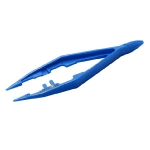
Disposable Plastic Tweezers
Product Code : EL-BLE-13088
Disposable Plastic Tweezers: unibody polypropylene, 15 cm length, autoclavable, non-sterilized; bulk and export supply via EduScope India.
View Details
Dissection Pins with Label Holder
Product Code : EL-BLE-13089
Dissection Pins with Label Holder: steel pins, coiled label loop, 64 mm tall, 1 mm dia, 12 mm loop; bulk and export supply via EduScope India, pairs with Disposable Plastic Tweezers.
View Details
Rain Gauge
Product Code : EL-BLE-13090
Rain Gauge: portable polystyrene rain gauge, up to 5 inches rainfall, magnifying lens, 12x2.7x1.5 inches; bulk and export supply via EduScope India.
View Details
Water Sampler
Product Code : EL-BLE-13091
Water Sampler: PVC depth-sampling tool, 1.5 L capacity, 30x10 cm tube, 20 m floating line; bulk and export supply via EduScope India, pairs with Rain Gauge.
View Details
Metal Sieves
Product Code : EL-BLE-13092
Metal Sieves: stackable stainless steel sieve set (6 sizes, 4000-63 micron), 20 cm dia, with lid and catch pan; bulk and export supply via EduScope India, pairs with Water Sampler.
View Details
Mini Weather Station
Product Code : EL-BLE-13093
Mini Weather Station: post-mounted temperature, wind speed, wind direction and rainfall station with wind chill chart; bulk and export supply via EduScope India, pairs with Rain Gauge.
View Details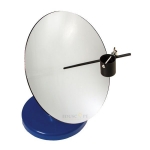
Solar Furnace
Product Code : EL-BLE-13094
Solar Furnace: convex-mirror solar concentrator, 30 cm mirror, 180-degree adjustable, boils a 20 ml water sample; bulk and export supply via EduScope India.
View Details